
NEWS
🔥 TRUMP DROPS POLLING BOMB: “HIGHEST APPROVAL IN U.S. HISTORY — NOT EVEN CLOSE!”

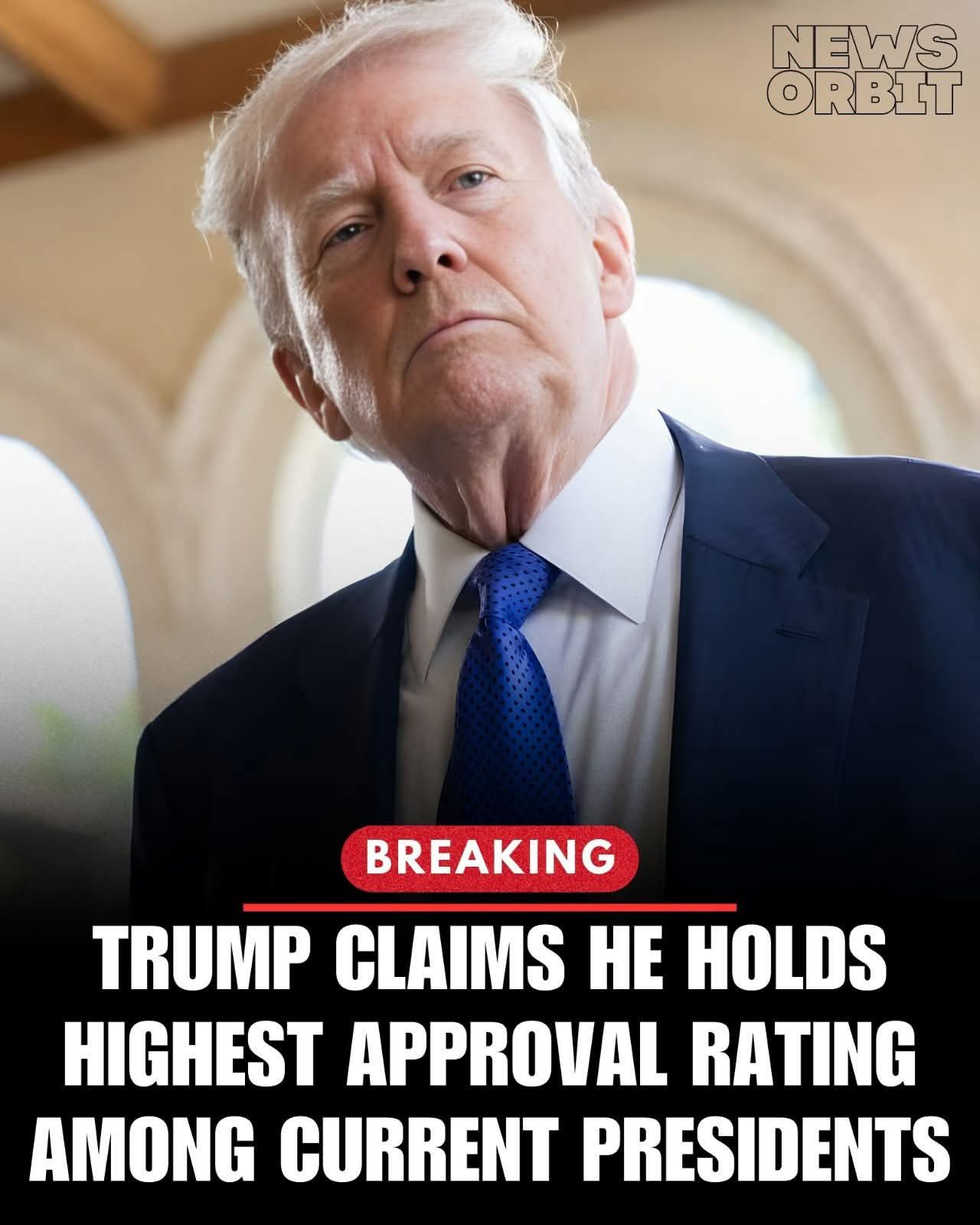
🔥 TRUMP DROPS POLLING BOMB: “HIGHEST APPROVAL IN U.S. HISTORY — NOT EVEN CLOSE!”
The political arena just lit up again.
Former President Donald Trump is once more commanding headlines — this time with a bold declaration that he currently holds the highest approval rating of any U.S. president in history.
“It’s not even close, folks,” he told supporters in a headline-style message that quickly spread across social media.
Within hours, the claim ignited celebration among loyal backers — and sharp scrutiny from critics.
The Claim That Sparked the Firestorm
Approval ratings have long been a political scoreboard. For Trump, they’re more than numbers — they’re validation. His message reinforces a consistent theme throughout his political career: public support equals leadership strength.
Supporters argue:
A poll conducted during economic uncertainty may produce very different results than one conducted after a major political event. Comparisons across presidencies are even more complex, given shifts in media landscapes, polarization levels, and voter behavior over decades.
In today’s hyper-digital environment, narratives often travel faster than data.
Perception vs. Precision
Modern politics isn’t just about numbers — it’s about framing.
A bold claim can:
Energize supporters
Dominate news cycles
Shape public perception before analysts finish their breakdown
Even when experts urge context, the headline often leaves the stronger impression.
And that’s the battlefield Trump understands well.
Why This Matters Now
With election conversations heating up and political divisions deepening, approval ratings aren’t just statistics — they’re strategic tools.
If voters believe a candidate is surging, momentum can follow.
If they believe numbers are exaggerated, skepticism grows.
The debate isn’t just about percentages.
It’s about trust. Credibility. Influence.
The Big Question
Is this historic dominance…
Or a powerful political narrative designed to energize a base and shape the conversation?
In an era where perception can rival data, the answer may depend less on the poll — and more on who you ask.
👇 What do you think?
Do approval ratings reflect true leadership strength — or are they just political ammunition in a never-ending numbers war?

Weto czy podpis? Czy Polska powinna skorzystać z unijnego programu finansowania zbrojeń SAFE, czy prezydent powinien go zablokować? Jak uważacie? 💬🤔🪖

Takie spontaniczne pytanie od rana mamy – O Co Chodzi Tym Razem?

🔥 TRUMP DROPS POLLING BOMB: “HIGHEST APPROVAL IN U.S. HISTORY — NOT EVEN CLOSE!”

Do you support this? If yes click the link below !

🟥Mocne słowa premiera i natychmiastowa reakcja polityków ⚠️🗣️ Sprawa wywołała debatę o języku w polityce. Gdzie leży granica? 💬

Just in :Donald Trump has sparked intense political debate after asserting that he generated more than $17 trillion for the United States in just eight months, while claiming that President Joe Biden produced only $1 trillion over four years…

President Trump has endured two impeachments, multiple legal battles, and constant attacks from his political adversaries, but he stands resolute. Attempts to undermine him, whether through deep-state plots or baseless accusations, have only strengthened his resolve. Throughout it all, Trump continues to fight for the American people, demonstrating that genuine leadership cannot be shaken by partisan assaults. His steadfast dedication to putting America first remains as strong as ever.

Rząd przygotowuje się na możliwe weto prezydenta Nawrockiego w sprawie programu SAFE. Magdalena Sobkowiak-Czarnecka ujawnia plan awaryjny.

Karol Nawrocki zabrał głos w rocznicę wybuchu wojny. Pochwalił Ukraińców

Kto zostanie nowym kandydatem PiS na premiera? Grupa Morawieckiego obawia się wypchnięcia, a Kaczyński już podjął decyzję. Co dalej?

🚨 Trade Shockwave: Trump Defies Expectations With Sweeping 15% Global Tariff Move After Supreme Court Ruling
