
NFL
Patrick Mahomes: The Weight He Carries So Others Can Believe Before the trophies. Before the parades. Before the word dynasty ever followed his name— There was Patrick Mahomes, a kid learning how to carry expectations heavier than most players ever face. Kansas City didn’t just give him a jersey. They handed him hope. And hope is never light.

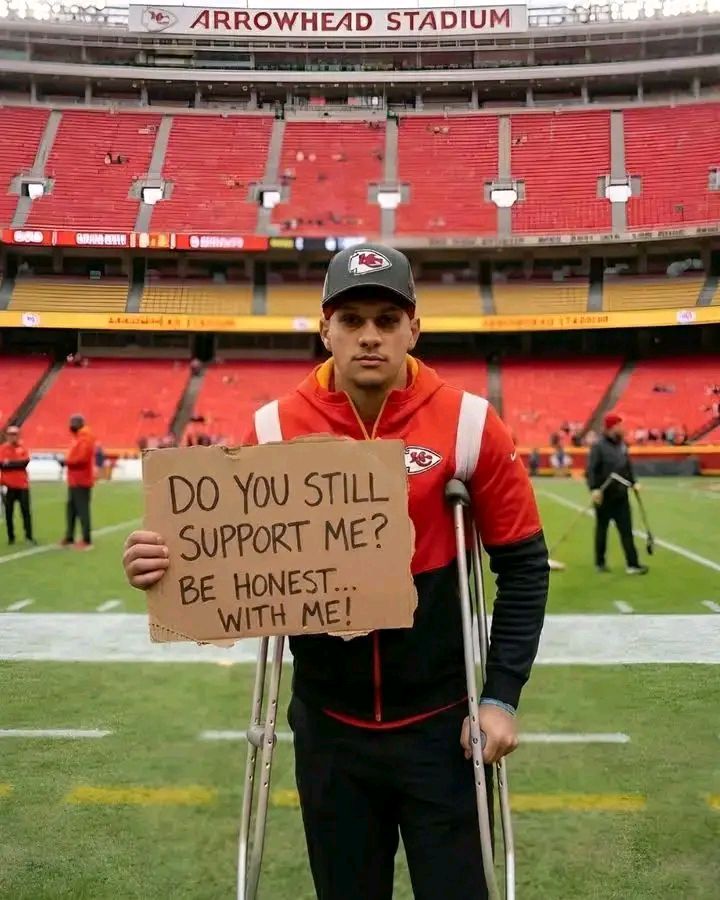
Patrick Mahomes: The Weight He Carries So Others Can Believe
Before the trophies.
Before the parades.
Before the word dynasty ever followed his name—
There was Patrick Mahomes, a kid learning how to carry expectations heavier than most players ever face.
Kansas City didn’t just give him a jersey.
They handed him hope.
And hope is never light.
Mahomes didn’t arrive as the loudest voice in the room.
He didn’t demand greatness.
He earned it, snap by snap, mistake by mistake.
Behind the no-look passes and impossible throws was a quarterback who stayed late when the stadium lights were off. A leader who took blame before praise. A teammate who listened before he spoke.
He understood something early:
If you want people to believe in you, you must believe in them first.
Every season, Mahomes walks onto the field knowing something most quarterbacks never will:
If he wins, it’s expected.
If he loses, it’s unforgivable.
There is no middle ground.
Yet he never points fingers.
Never shifts responsibility.
Never hides behind excuses.
When the pocket collapses, he stands in.
When the hits come, he gets back up.
When the season ends in disappointment, he faces the cameras with honesty — even when his voice shakes.
Because leadership isn’t about being perfect.
It’s about being present.
Mahomes plays with pain most fans never see.
Bruised ribs.
Ankle injuries.
Hands swollen and taped so tight they barely close.
But when his teammates look into the huddle, they don’t see pain.
They see calm.
They see a quarterback who says without words:
I’ve got you. No matter what.
Off the field, Mahomes carries a quieter responsibility.
He knows kids wear his jersey not because of how far he throws—but because of how he acts. Because of the way he treats losses. Because of how he lifts teammates instead of stepping on them.
He knows he represents more than a team.
He represents what leadership should look like.
And that weight?
He never sets it down.
When cry

NEWS10 hours ago
🚨 Trade Shockwave: Trump Defies Expectations With Sweeping 15% Global Tariff Move After Supreme Court Ruling

NFL11 hours ago
💪 Patrick Mahomes Putting in GRUELING 7-Hour Daily Rehab as He Pushes Toward 2026 Comeback

NFL11 hours ago
Chiefs Urged to Make Shocking Quarterback Move Amid Patrick Mahomes Injury Debate

NEWS11 hours ago
Ambasadorowie USA wyrazili zaniepokojenie unijnym mechanizmem SAFE, który może wpłynąć na transatlantycką współpracę obronną. Co to oznacza dla NATO?

NEWS11 hours ago
Ambasador USA odwiedzi Sejm po kontrowersyjnych wypowiedziach Czarzastego o Trumpie. Czy to oznacza nowe otwarcie w relacjach?

NEWS1 day ago
Nazwisko adwokata Ziobry pojawia się w prezydenckim projekcie ustawy. Co kryje się za tym zaskakującym odkryciem? Rzecznik prezydenta wyjaśnia.

NEWS3 days ago
Tusk szykuje mocny cios

NEWS3 days ago
🔥 Czy to początek końca dominacji? Jarosław Kaczyński przed największym wyzwaniem od lat! 🔥

NEWS3 days ago
Krzysztof Radzikowski, znany strongman, nie ukrywa swoich poglądów na temat Karola Nawrockiego. Co takiego powiedział o prezydencie?

NEWS3 days ago
🔥 Polityczne trzęsienie ziemi! Niesłychana reakcja Żurka po wecie Nawrockiego wywołała burzę w całym kraju 🔥

NEWS3 days ago
Nowa Lewica planuje zaskakujący ruch przed wyborami 2027. Czy sojusze zmienią układ sił na scenie politycznej? Poznaj szczegóły strategii.

NEWS5 days ago