
NEWS
Breaking News;Canada Quietly Deepens Defense Ties With Europe, Sparking Debate Over Sovereignty and Global Alignment

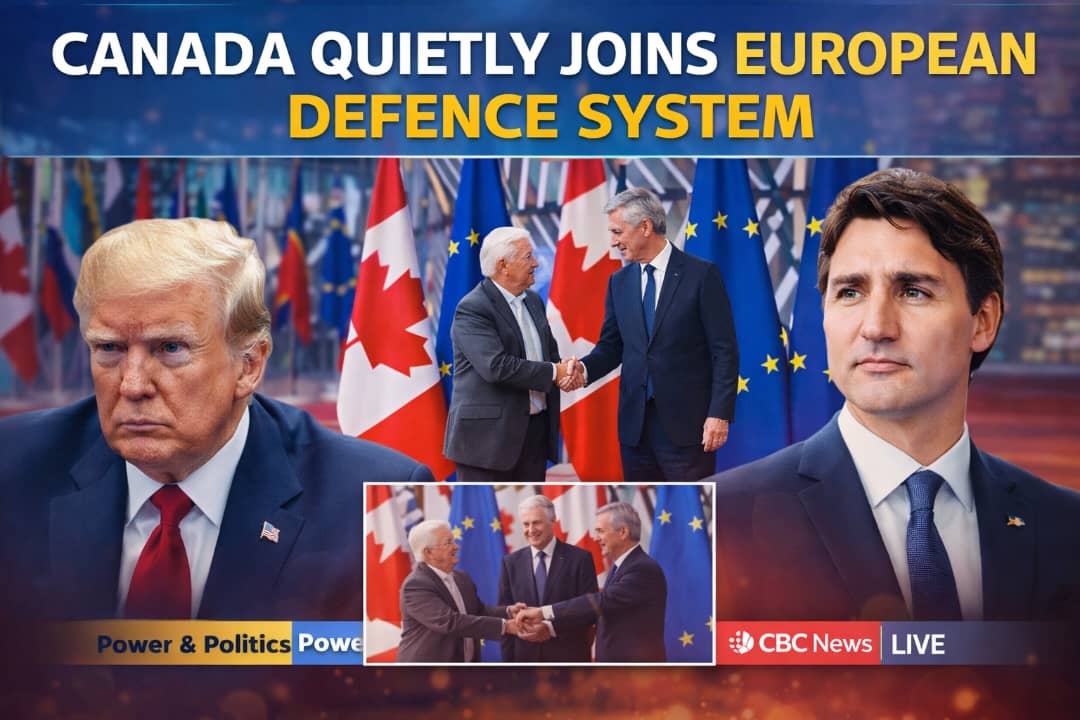
Breaking News;Canada Quietly Deepens Defense Ties With Europe, Sparking Debate Over Sovereignty and Global Alignment
Canada has signed a new agreement that significantly deepens its defense and security cooperation with the European Union, a move that has triggered growing debate among political analysts and citizens after details surfaced online. According to reports highlighted in the image circulating on social media, the agreement was finalized with little public announcement, fueling claims that the decision was made “quietly” through administrative channels rather than open parliamentary debate.
The deal reportedly strengthens Canada’s integration into European defense structures, expanding collaboration on military planning, intelligence sharing, cybersecurity, and joint operations. Footage shown in the image, originally aired on CBC News, depicts Canadian and European officials standing together amid EU and Canadian flags, symbolizing a closer strategic alignment between Ottawa and Brussels.
Supporters of the agreement argue that the partnership is a logical step in an increasingly unstable global security environment. With rising geopolitical tensions, particularly involving Russia and ongoing conflicts in Eastern Europe, proponents say Canada is reinforcing its commitment to democratic allies and collective defense. They also note that Canada has long cooperated with European partners through NATO and that this agreement formalizes and enhances existing relationships rather than creating a radically new framework.
However, critics see the development differently. Online commentators and alternative media outlets claim the deal represents a gradual erosion of Canadian sovereignty, suggesting that defense decisions may increasingly be influenced by European priorities rather than national interests. The lack of a major public announcement has become a central point of criticism, with opponents questioning why such a consequential agreement did not receive broader media coverage or parliamentary scrutiny.
The image also juxtaposes global political figures, including former U.S. President Donald Trump and a senior European official, underscoring concerns about how shifting alliances could affect transatlantic relations. Some analysts speculate that closer Canada–EU defense ties could complicate future dealings with the United States, especially if Washington adopts a more isolationist or unilateral foreign policy stance.
The Canadian government has not denied the agreement but has downplayed claims of secrecy, stating that defense cooperation with Europe has been evolving over years and remains fully consistent with Canada’s NATO commitments. Officials emphasize that Canada retains full control over its military forces and decision-making.
As more details emerge, the agreement is likely to remain a flashpoint in discussions about transparency, national sovereignty, and Canada’s role in an increasingly multipolar world. For now, what began as a low-profile signing has grown into a broader public conversation about power, politics, and the future of Canadian defense policy.

❓Ustawa SAFE czeka na decyzję. Co zrobi prezydent? 💰 Gigantyczne pieniądze na zbrojenia – podpis czy blokada? 🛡️

Znieważona, obrzucona wyzwiskami i wyrzucona z lokalu Gessler. Do tej pory nikt jej tak wcześniej nie potraktował

Lech Wałęsa z tytułem doktora?

🔥 Middle East on the Brink: Explosions in Kuwait City and Abu Dhabi as Iran Expands Strikes on U.S. Targets

🔥 Bliski Wschód Na Krawędzi: Eksplozje w Kuwejcie i Abu Zabi Gdy Iran Rozszerza Ataki na Cele USA

🚨 BREAKING: Over a Dozen U.S. Warships Move Into Striking Range of Iran — Is a Major Conflict Imminent?

Weto czy podpis? Czy Polska powinna skorzystać z unijnego programu finansowania zbrojeń SAFE, czy prezydent powinien go zablokować? Jak uważacie? 💬🤔🪖

Takie spontaniczne pytanie od rana mamy – O Co Chodzi Tym Razem?

🔥 TRUMP DROPS POLLING BOMB: “HIGHEST APPROVAL IN U.S. HISTORY — NOT EVEN CLOSE!”

Do you support this? If yes click the link below !

🟥Mocne słowa premiera i natychmiastowa reakcja polityków ⚠️🗣️ Sprawa wywołała debatę o języku w polityce. Gdzie leży granica? 💬
