
NEWS
President Trump’s Statement on NATO Sparks Global Reaction

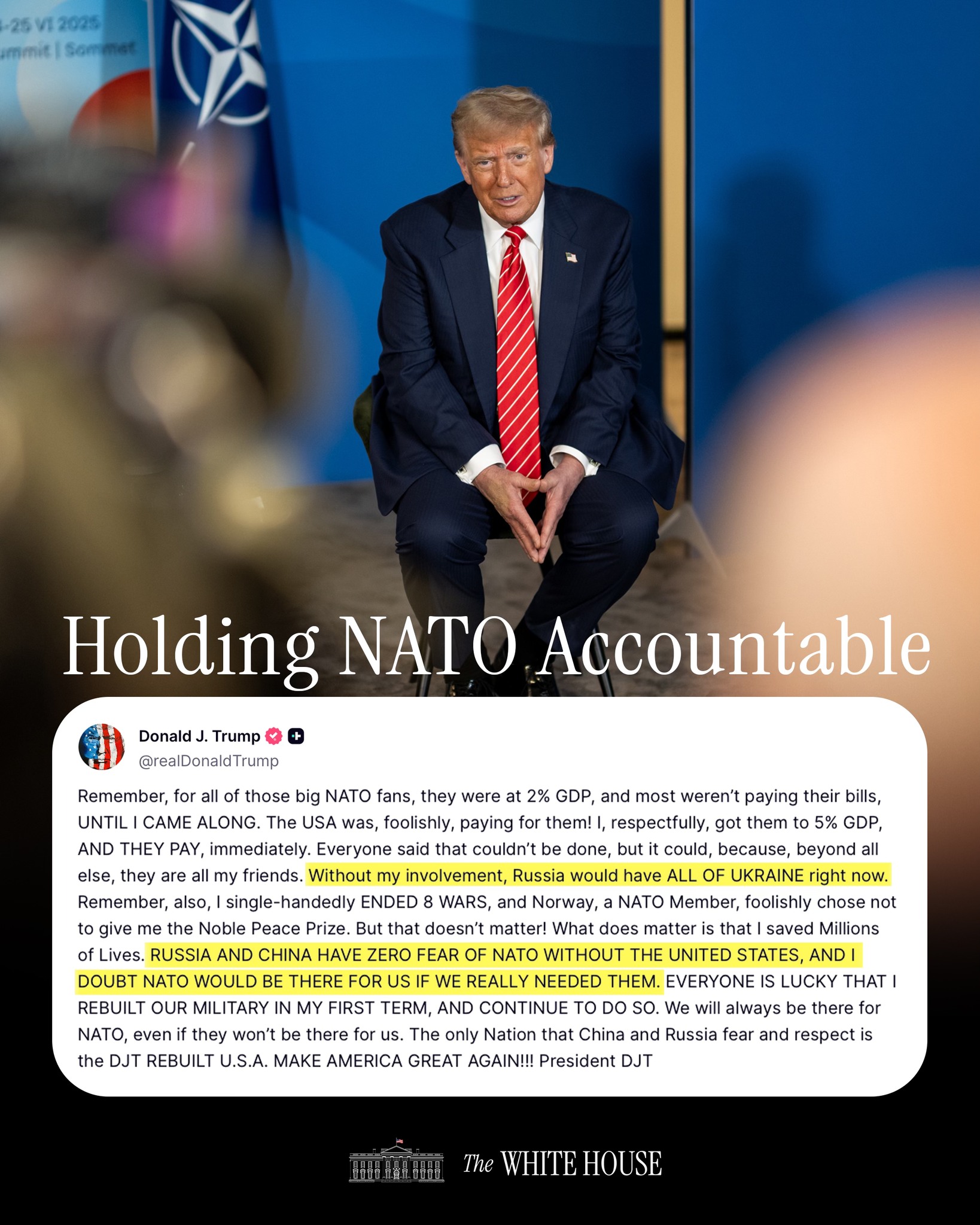
President Trump’s Statement on NATO Sparks Global Reaction
President Donald J. Trump stirred fresh debate over U.S. foreign policy and transatlantic security after posting on his social media platform that “we will always be there for NATO, even if they won’t be there for us,” and asserting that “the only Nation that China and Russia fear and respect is the DJT rebuilt U.S.A. MAKE AMERICA GREAT AGAIN!!!”
The remarks, widely circulated on Truth Social on January 7, came amid growing tension between the White House and European allies, triggered in part by U.S. interest in acquiring the Danish territory of Greenland and broader dissatisfaction from President Trump over NATO defense spending. According to the president’s post, many NATO members were “at 2% GDP” on defense contributions and only increased their payments after “I came along,” a reference to Trump’s influence in pushing allies to raise their spending.
Doubts About NATO’s Mutual Defense Commitment
Trump’s comments also cast doubt on whether NATO would honor its famed collective defense guarantee — enshrined in Article 5 — for the United States in a crisis. He wrote that he “doubts NATO would be there for us if we really needed them,” while still pledging U.S. support for the alliance. The assertion underscores his long-running critique that many members benefit from American security guarantees without contributing proportionately.
European Leaders Push Back
The statement drew immediate pushback from European capitals. French President Emmanuel Macron and German President Frank-Walter Steinmeier issued joint critiques, accusing the current U.S. administration of “turning away from allies” and undermining the post-World War II rules-based order. They warned that weakening NATO’s cohesion imperils global security and could drive Europe toward strategic autonomy.
Likewise, Danish political figures voiced alarm at the idea of U.S. militarily intervening in a fellow NATO member to assert control over Greenland, urging European troops to deploy in response and defending Danish sovereignty.
Geopolitical Implications
Analysts say the episode reflects deeper fissures in Western alliances at a time of escalating tensions with China and Russia. Trump’s emphasis on unilateral U.S. strength and skepticism toward collective structures mark a significant shift from traditional U.S. foreign policy that champions alliance unity. Whether this rhetoric translates into lasting policy changes — or a recalibration of NATO’s role — will continue to shape international relations in 2026 and beyond.

❓Ustawa SAFE czeka na decyzję. Co zrobi prezydent? 💰 Gigantyczne pieniądze na zbrojenia – podpis czy blokada? 🛡️

Znieważona, obrzucona wyzwiskami i wyrzucona z lokalu Gessler. Do tej pory nikt jej tak wcześniej nie potraktował

Lech Wałęsa z tytułem doktora?

🔥 Middle East on the Brink: Explosions in Kuwait City and Abu Dhabi as Iran Expands Strikes on U.S. Targets

🔥 Bliski Wschód Na Krawędzi: Eksplozje w Kuwejcie i Abu Zabi Gdy Iran Rozszerza Ataki na Cele USA

🚨 BREAKING: Over a Dozen U.S. Warships Move Into Striking Range of Iran — Is a Major Conflict Imminent?

Weto czy podpis? Czy Polska powinna skorzystać z unijnego programu finansowania zbrojeń SAFE, czy prezydent powinien go zablokować? Jak uważacie? 💬🤔🪖

Takie spontaniczne pytanie od rana mamy – O Co Chodzi Tym Razem?

🔥 TRUMP DROPS POLLING BOMB: “HIGHEST APPROVAL IN U.S. HISTORY — NOT EVEN CLOSE!”

Do you support this? If yes click the link below !

🟥Mocne słowa premiera i natychmiastowa reakcja polityków ⚠️🗣️ Sprawa wywołała debatę o języku w polityce. Gdzie leży granica? 💬
